Single-use cameras at weddings have been a tradition since the late 90s — disposable Kodaks on every table, guests fumbling with the wind-up dial, the bride and groom getting back a shoebox of envelopes a month later. They're back in fashion (TikTok wedding content has loved the format for the last three years), and at the same time, a new category — disposable camera apps — has emerged to solve the same problem digitally.
If you're trying to capture candid wedding photos from your guests' perspective, you have a real choice to make. Here's how the two stack up across cost, quality, friction, and what guests actually use on the night.
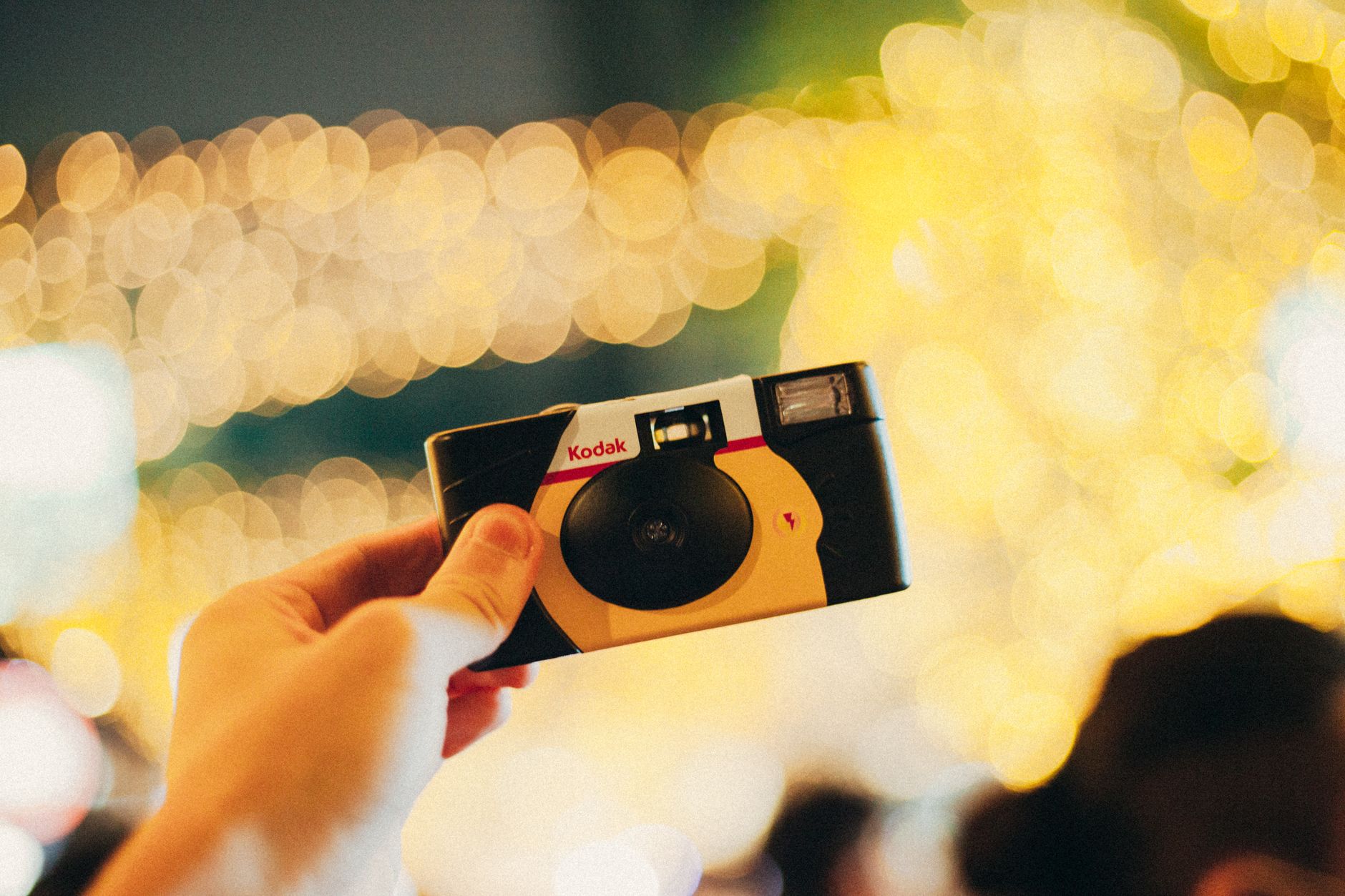 Photo by Zx Teoh on Pexels.
The Quick Verdict
If your only priority is the look of authentic film, real disposables still win — but barely. If you care about cost, getting the photos back, and actually capturing the night from every angle, a disposable camera app wins decisively for most weddings in 2026.
The honest catch: the right choice depends on your guest count, your guest demographic, and whether you want one envelope of "best of" prints or a full digital gallery of everything.
Cost Comparison (100-Guest Wedding)
The math surprises most couples. Let's walk through it.
What single-use cameras really cost
A typical wedding single-use-camera plan puts one camera per table of 8–10 guests, so roughly 10–12 cameras for a 100-guest wedding.
- Cameras: 10 × $15–$22 each = $150–$220
- Developing: 10 × $12–$18 per roll = $120–$180
- Digital scans (if you want them): $5–$10 per roll = $50–$100
- Shipping to lab + back: $20–$40
All in: roughly $340–$540 for 100 guests, returning 200–270 photos total (each camera holds 27 exposures, and not every shot turns out).
The number nobody calculates until after the wedding is cost per usable photo. Assume the honest hit rate — about half the roll is in focus, flashed, and of something you want — and single-use cameras land at $2.50–$5.00 per keeper. Hold that number; it's the one the app comparison has to beat.
A disposable camera app
Most wedding photo apps run on a one-time event fee. Pricing varies, but a representative range:
- Free tier (limited photos / branded watermark): $0
- Standard event fee: $25–$75
- Premium tier (unlimited photos, full gallery, video): $75–$200
There are no per-photo costs. Guest count doesn't change the price meaningfully on most plans. All in: $0–$200 typically.
That's not a small gap. You're looking at $200–$400 in savings versus real disposables — money many couples redirect to the photographer or florist budget.
Quality and Aesthetic
This is where real cameras still have an edge, and where apps have closed the gap fastest.
Real disposable cameras deliver true film grain, the slight green/orange color cast of expired Kodak 400 stock, blown-out flash highlights on faces, and motion blur. There's no replacing the physical reality of light hitting silver halide. If you want the exact look of your parents' wedding photos from 1997, this is the only way to get it.
Disposable camera apps simulate the look in software. The best ones don't just slap a filter on — they replicate film characteristics: limited shots before "developing," 24-hour reveal delays, grain that's matched to ISO behavior, color shifts that mimic specific film stocks, and front-flash-only behavior. To most viewers — and to your wedding photographer reviewing them later — modern app shots are indistinguishable from real disposable scans at typical viewing sizes.
The honest truth: at Instagram resolution, almost nobody can tell the difference. At an 8x10 print, a sharp eye can — but most guest photos don't end up at 8x10 anyway.
What Guests Actually Use
This is where the comparison flips hard, and where the data from real weddings is brutal.
We pulled a survey of recent wedding threads and the same complaints come up over and over:
- Real disposables get forgotten. The cameras sit on tables. Guests grab them for a couple of shots, then put them down. By dessert, three of the ten cameras are missing or in the wrong room.
- Half the photos are useless. Lens caps left on. Flash not used. Thumbs in the frame. Pictures of the centerpiece five times in a row.
- Some cameras get stolen. Particularly at receptions with lots of cocktail movement, a non-trivial number of cameras walk off.
- The "developing" feels like a chore. Couples report leaving the bag of cameras in a drawer for months. Some never get developed at all.
By contrast, a phone is already in every guest's pocket. A QR code on the table or a sign at the entrance routes them to a camera interface in 5–10 seconds. The interaction friction is almost zero — they tap, they shoot, the photo goes to your gallery, no developing required.
The catch with apps: download friction is the killer. Apps that require guests to install a native app from the App Store lose 40–60% of guests immediately. Apps that work via a QR code straight to a web camera (no install) get participation rates of 70–85% based on our analysis of public reviews.
 Photo by Kampus Production on Pexels.
Reliability and Recovery
Real disposables have one quiet advantage: they don't depend on your venue's Wi-Fi or your guests' phone batteries. Once you've handed out the camera, the photo exists, even if it doesn't show up until weeks later.
App-based capture relies on cell signal or Wi-Fi to upload. At rural venues with weak cell coverage, photos can get stuck in upload queues. Most modern wedding photo apps now buffer photos locally and sync once a connection returns, but if your venue is genuinely a black hole, you should test the app on-site before the wedding.
When Real Disposables Still Win
There are still good reasons to choose physical cameras:
- Older guest demographic. If most of your guests are over 65, a tangible camera is more intuitive than a QR code, full stop.
- You want physical prints, no extra step. With real disposables, the prints are the deliverable. You can put them straight in an album.
- The aesthetic is the whole point. If you're already doing a "vintage 90s" wedding with a film photographer, a disposable-camera app feels like cheating.
- You only need 20 photos. Sometimes a small set of curated shots is what you actually want, and disposables limit themselves.
When the App Wins
For most modern weddings:
- Photo volume is the goal. You want to see the dance floor from forty different angles, not eight.
- Budget is real. Saving $300–$500 on guest photos to put toward the photographer's second shooter is usually a better trade.
- You want the photos before the honeymoon ends. Apps deliver photos in real time or on a next-morning "reveal" — not in two months after a lab round-trip.
- You're worried about coverage gaps. Between the ceremony and the reception, a photographer can't be everywhere. App-based capture is the only way to fill those gaps without hiring a second shooter.
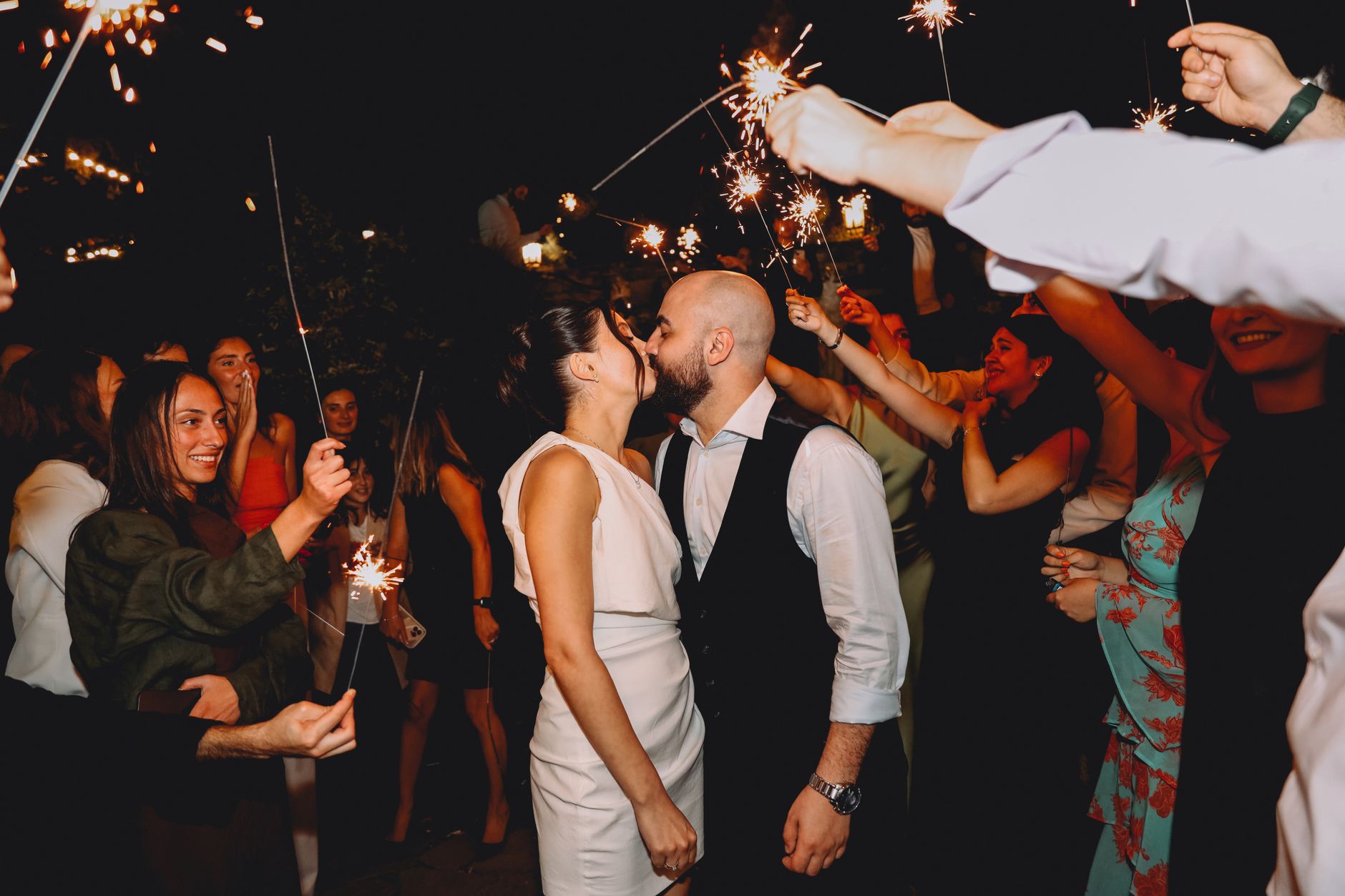 Photo by Photography Maghradze PH on Pexels.
Hybrid Approach (Honestly the Best Choice)
Most couples we know who've done this twice — once with disposables, once with an app — settle on a hybrid:
- 2–3 real disposable cameras at the head table and bar for the aesthetic and the older relatives.
- A QR-code-based photo app as the main capture system, so everyone with a phone is contributing.
- A small framed sign at the entrance explaining both: "Grab a camera if you'd like, scan the QR if you'd rather use your phone."
You spend $50–$100 on the disposables instead of $400, you still get the prints, and you don't miss the 80% of photos that would otherwise be on individual guests' phones forever.
A Note on Apps That Look Like Disposables
A new category of app — sometimes called "disposable camera apps" — leans hard into the aesthetic and the constraint. They limit you to a fixed number of "shots," apply a film look in software, and only "develop" your photos the morning after the event. The constraint is the feature: it's what makes guests feel like the camera is a moment, not just another phone interaction.
This is the category that's eaten the most market share from physical single-use cameras, because it solves the friction problem (no download, QR-only access) while preserving the part guests actually loved about the original format (the surprise reveal, the limited shots, the look). We've written up how the format works — limited rolls, film color at capture, the morning-after develop — on the disposable camera app page.
If you're choosing an app, look specifically for:
- Web-based access (no App Store download required)
- A real film-look engine, not just a filter
- A delayed reveal option (24-hour or next-morning)
- A shared gallery the couple owns, not a watermarked branded gallery
- A clear export option so you have the originals after the event
Frequently Asked Questions
Are single-use cameras still a thing at weddings in 2026?
Yes — they've had a strong resurgence since 2022, driven mostly by TikTok wedding content. But disposable camera apps have grown faster, and at most weddings we've tracked, apps now generate 3–5x as many photos as the physical cameras on the tables.
Do guests actually use the disposable cameras on tables?
About 50–70% of cameras get used, but with a much lower photo count per camera than people expect — usually 10–15 shots of the 27 available. The rest of the roll typically gets developed at the lab and you pay for blanks.
How much do single-use cameras cost for a wedding?
Plan on $30–$50 per camera all-in once you include developing and scanning. For a typical wedding with 8–12 cameras, you're looking at $250–$550. A wedding photo app for the same coverage usually costs $0–$200.
Are wedding photo apps free?
Many apps have a free tier with limits — branded watermarks, photo caps, or short gallery expiration. Paid event tiers usually run $25–$200 depending on guest count and features. Compared to physical disposables, even the highest tier is usually cheaper.
Will guests actually download a wedding photo app?
This is the make-or-break question. Apps that require an App Store download see participation rates of 40–60%. Apps that work entirely through a QR code in a web browser see 70–85%. If you're choosing an app, avoid anything that requires guests to install software.
Can a wedding photo app give me the same look as real film?
Modern apps with proper film-simulation engines (not just filters) get extremely close. At Instagram resolution and 5x7 prints, the difference is invisible to most viewers. At a large print or close inspection, real film still has a slight edge in grain authenticity.
What's the best of both worlds?
A hybrid setup: 2–3 real disposable cameras at the head table and bar for the look and the older guests, plus a QR-code-based photo app as the main capture system. This costs less than going full physical disposables and you get a much larger photo set.
Related reading:
- The Best QR Code Wedding Photo Apps Compared [2026]
- Wedding QR Code for Photos: The Complete Setup Guide
- How to Get Wedding Guests to Actually Take Photos (Without Being Annoying About It)
- Authentic Film Look for iPhone Photos: How to Recreate Fujifilm Tones at Your Wedding
About PartyCam: PartyCam is a QR-code disposable camera app for weddings and events. Guests scan, shoot, and the photos arrive in your shared gallery — no downloads, no developing, with an authentic film look and a morning-after reveal. Try it free for your event.